Roof Leak Water Damage - What It Really Looks Like Inside Your Walls
A roof leak rarely stays where you can see it. Water finds its way through the smallest gaps, travels along framing, soaks into subfloor, and sits inside your walls long after the rain stops. By the time most homeowners call us, the damage has already spread well beyond the original entry point.
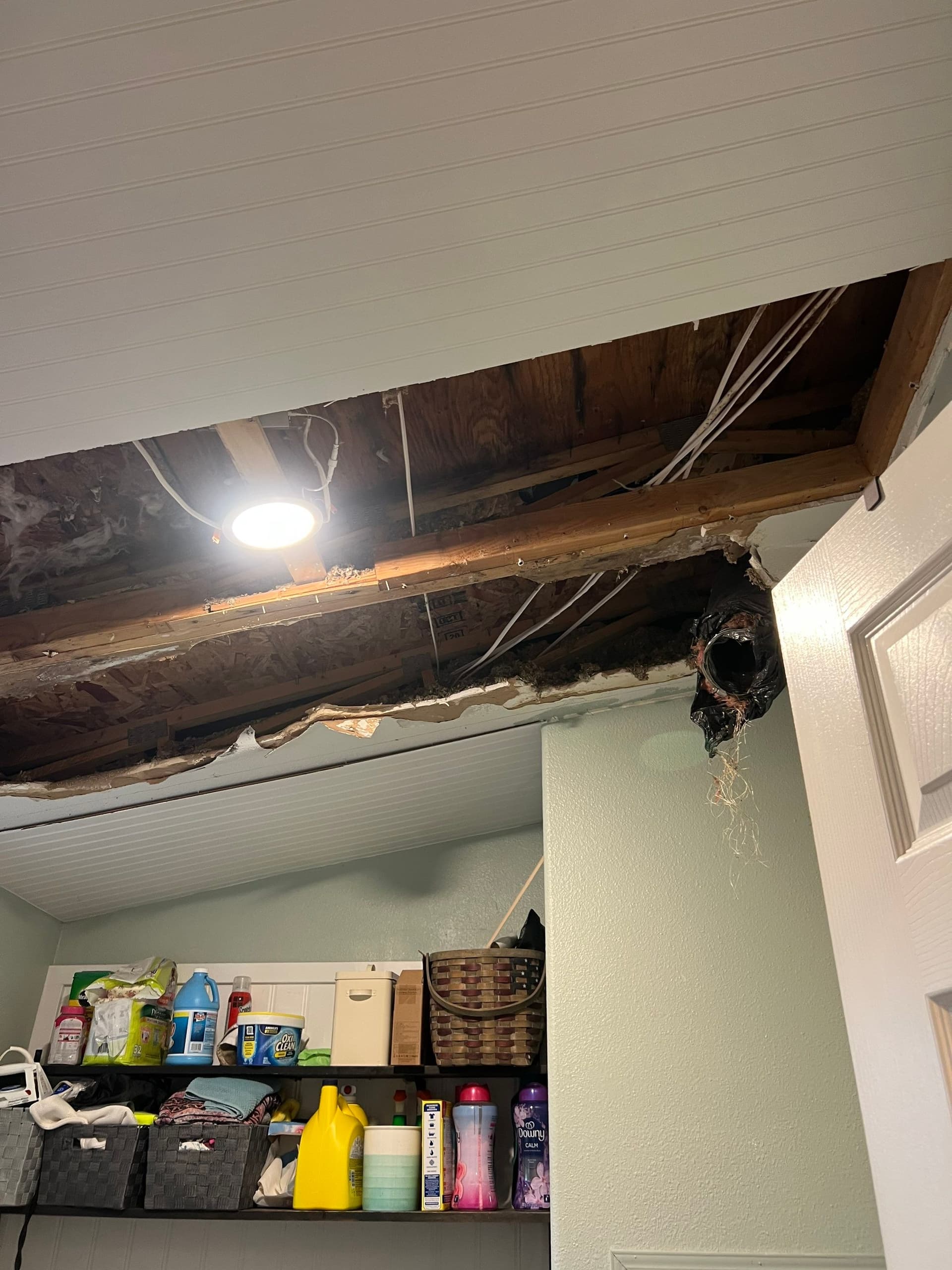
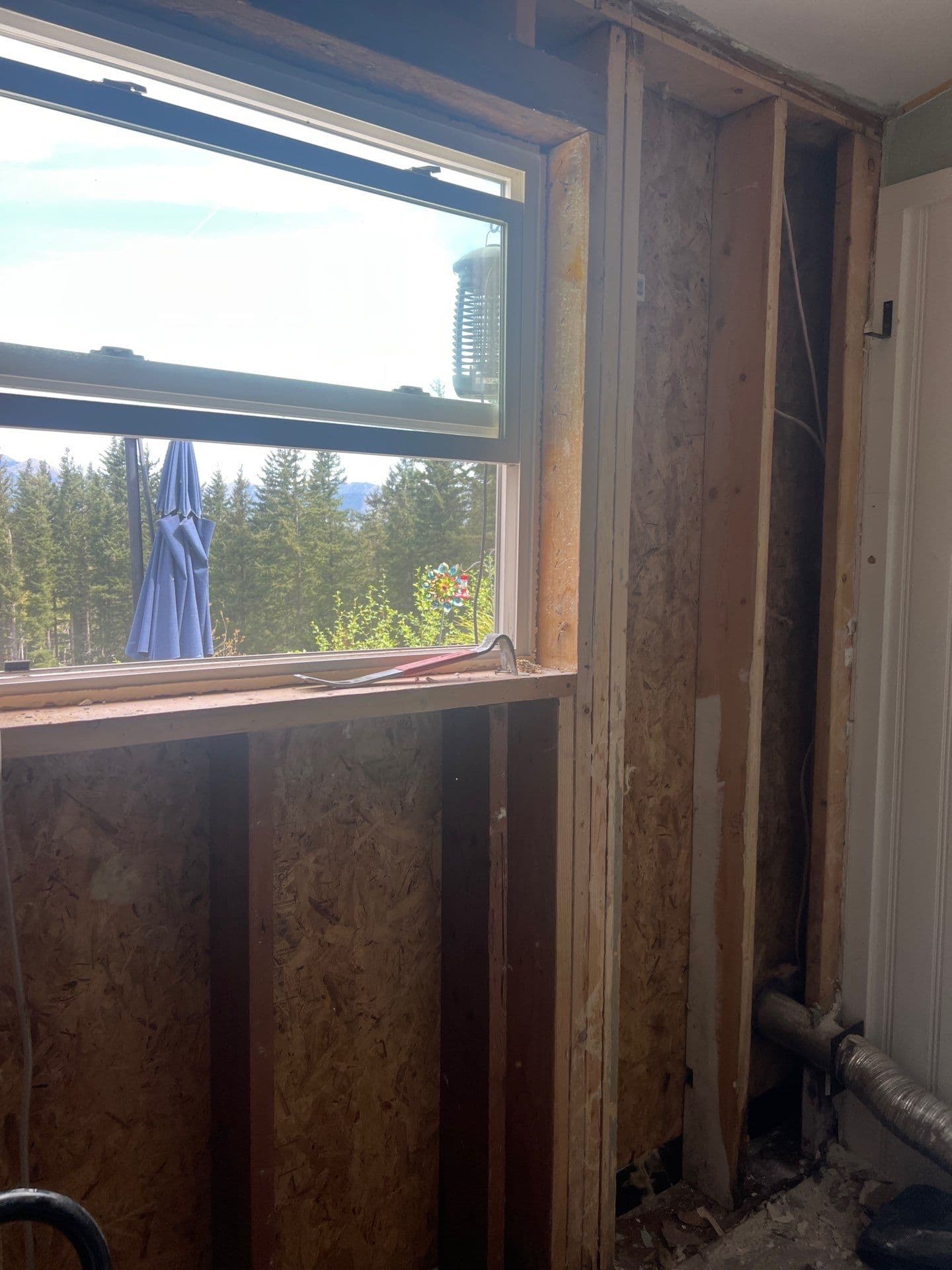
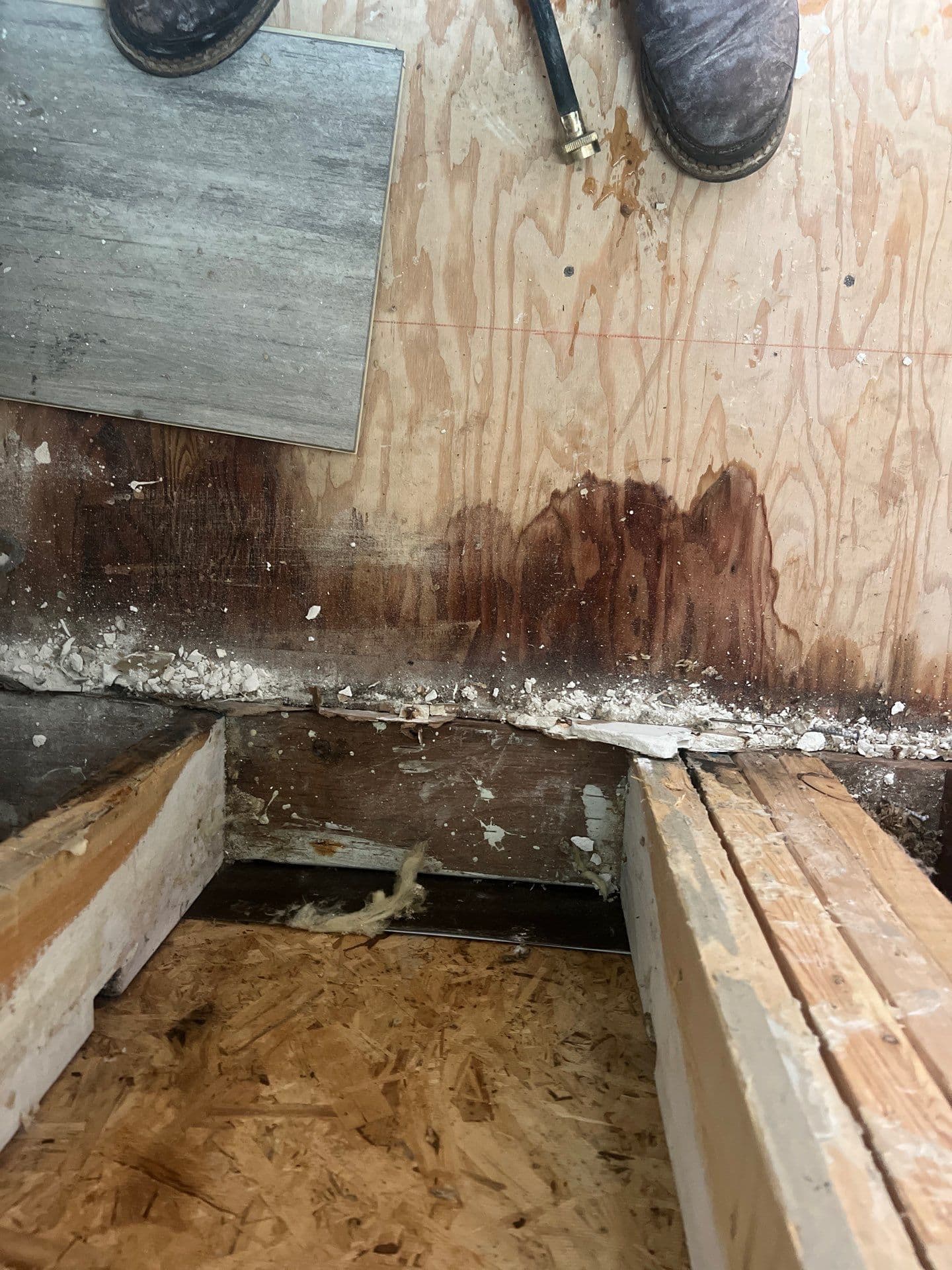
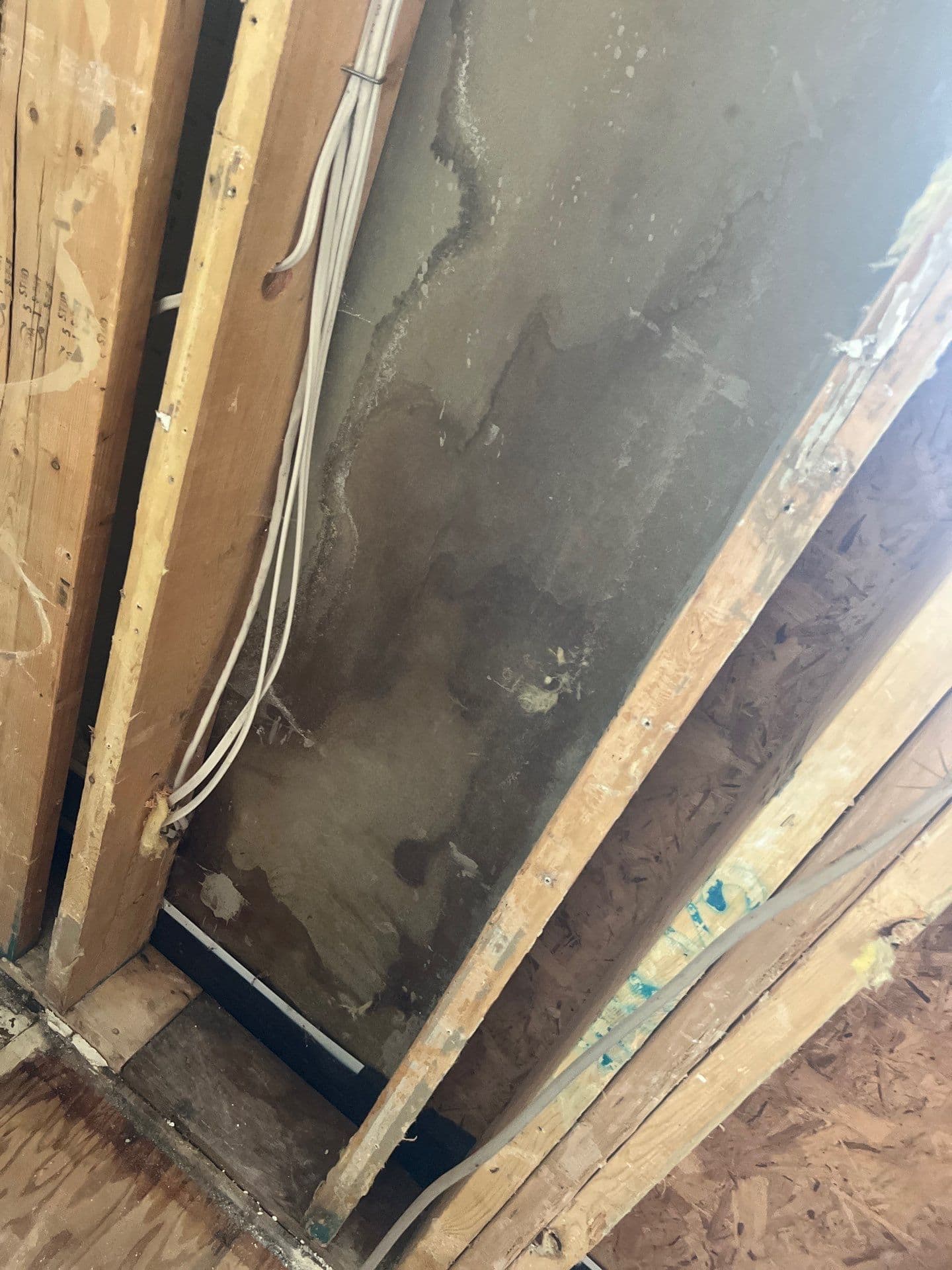
Here's what we were working with on this one - a ceiling that had completely given way, exposing the rafters and framing above. The drywall was gone. The subfloor near the base of the walls showed heavy dark staining and moisture saturation. The wall cavity had visible water marks running the full height of the sheathing. This is what a leak that went unaddressed long enough actually looks like behind the finish materials.
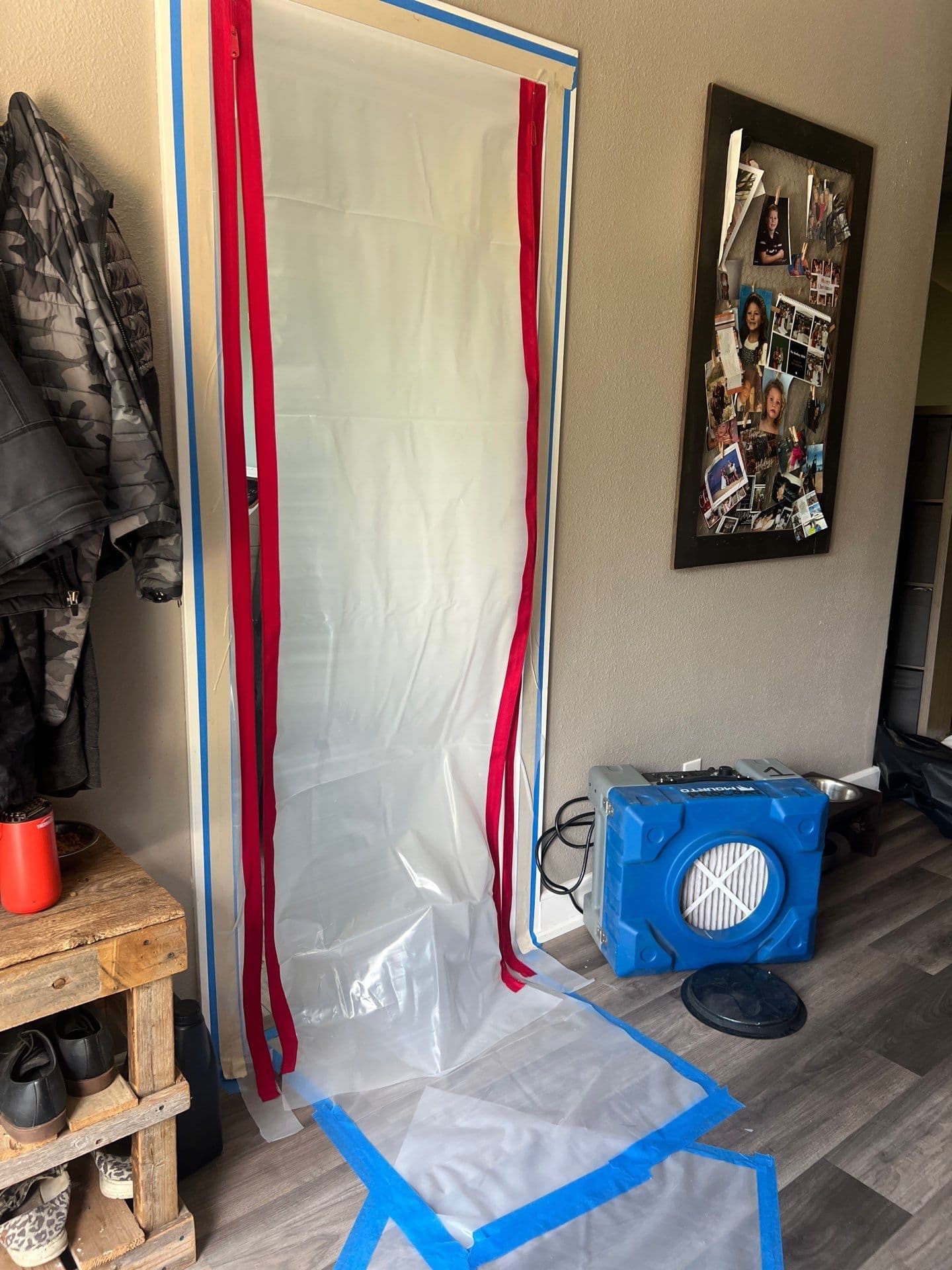
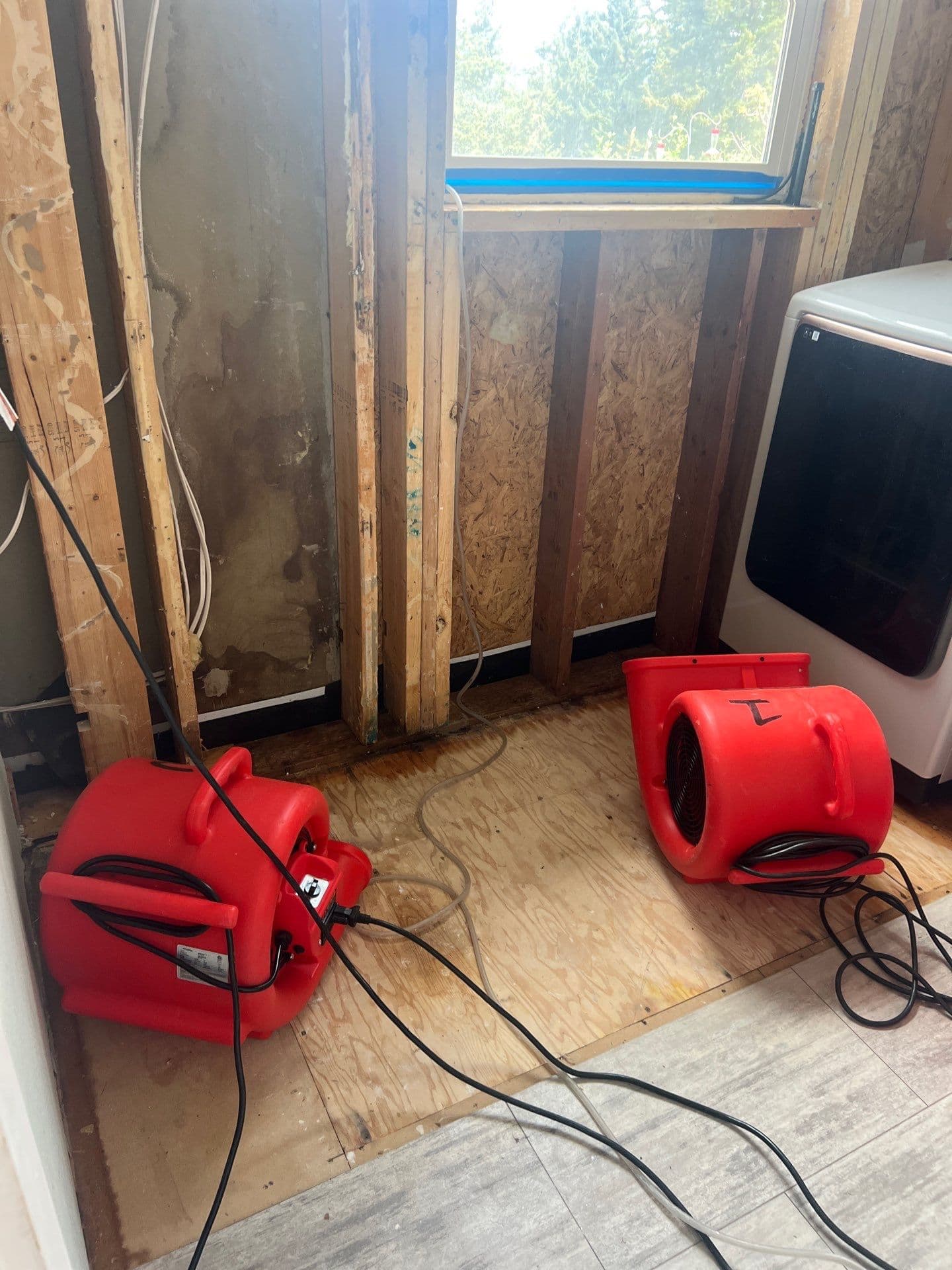
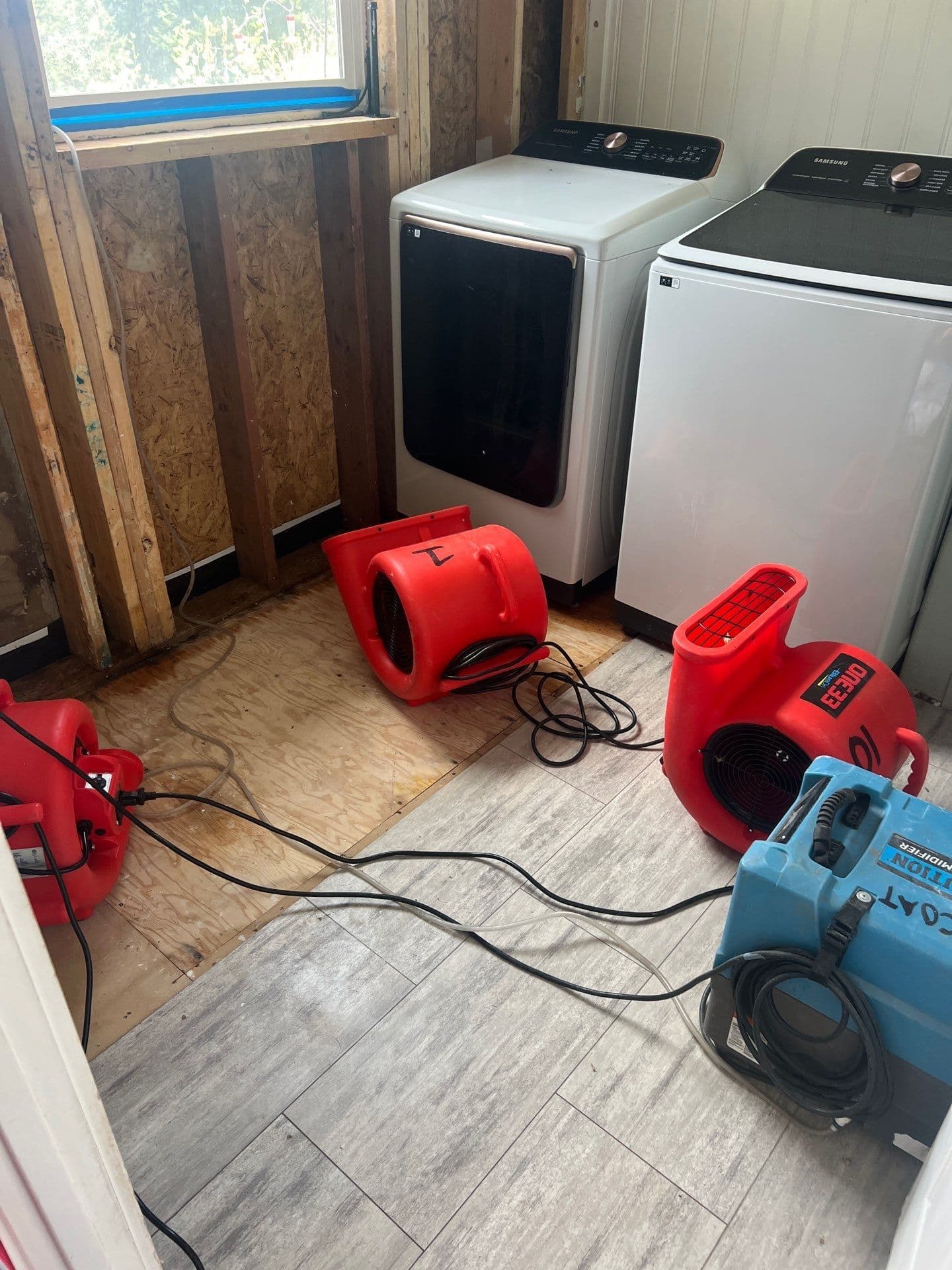
Before any rebuild happens, the structure has to be dry - and we mean actually dry, not just surface dry. We set up containment barriers to isolate the work area, then ran multiple air movers and a dehumidifier directly in the affected space. Our structural drying and dehumidification process pulls moisture out of the framing and subfloor at a level that fans from a hardware store simply can't reach. Skipping this step is how mold problems start.
Once the readings confirmed the structure was dry, we were ready to move into the repair phase - drywall, flooring, and full wall rebuild. We also help homeowners work through the insurance process, which on jobs like this one can feel just as overwhelming as the damage itself. Having one company handle the dry-out, mitigation, and rebuild means nothing falls through the cracks between contractors.
If you noticed a water stain, a soft spot, or a drip - even a small one - don't wait to get it checked. The longer moisture sits inside a structure, the more expensive and involved the fix becomes. We've seen it every time.